

 Facebook
 X
 Pinterest
 Copy Link
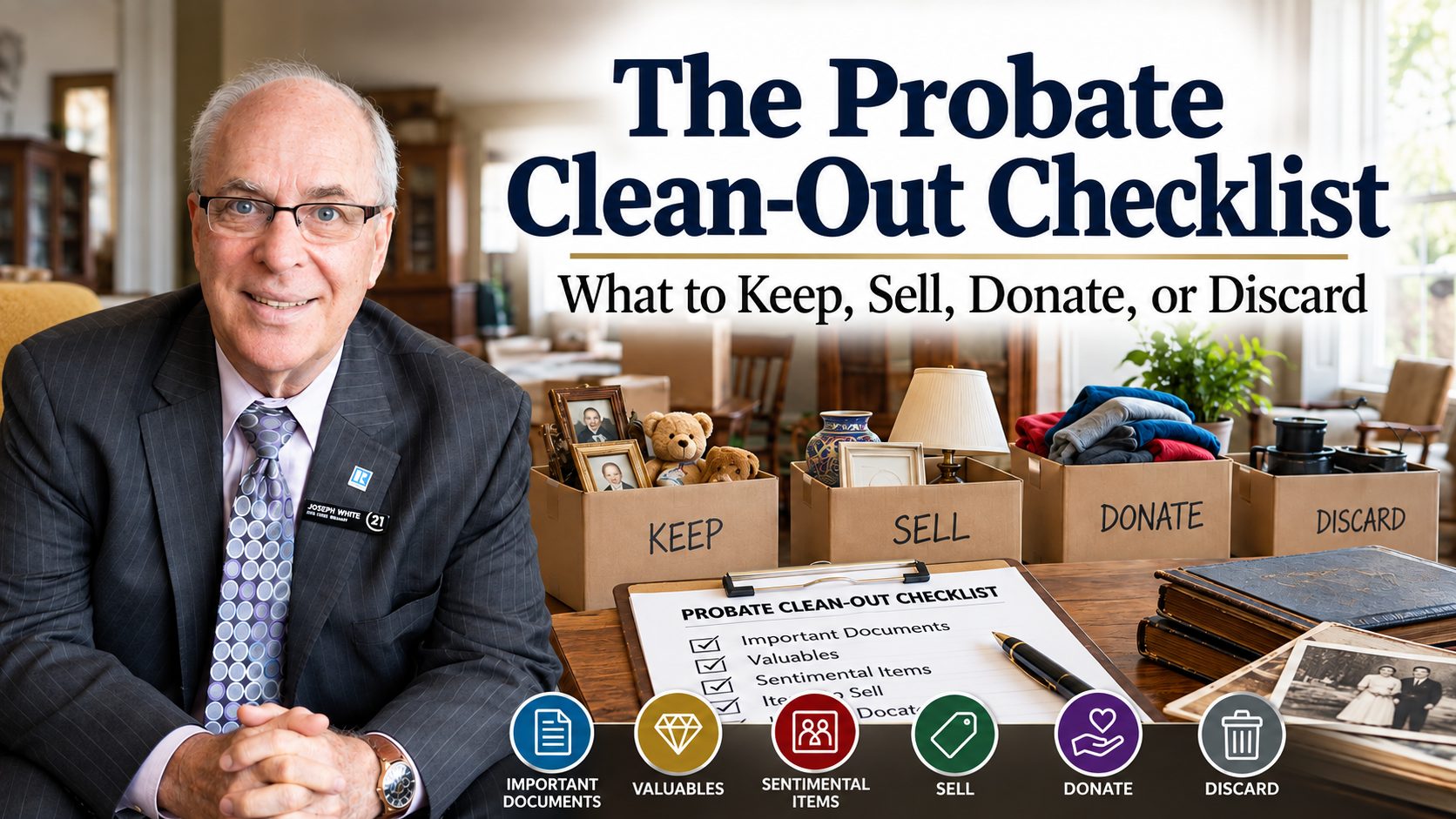
The Probate Clean-Out Checklist: What to Keep, Sell, Donate, or Discard
Cleaning out a probate home is one of the most emotional parts of handling an estate.
For many families, the house is not just a property. It may be the place where parents raised children, holidays were celebrated, family photos were taken, and decades of personal belongings were collected. Walking through the home can bring back memories, grief, stress, and sometimes disagreement among family members.
That is why a probate clean-out should not begin with a dumpster.
It should begin with a plan.
In Oakland and Macomb Counties, many probate homes have been lived in for many years. Some homes are neat and lightly furnished. Others may have basements, garages, attics, sheds, closets, tools, paperwork, furniture, holiday decorations, family keepsakes, and items that have not been touched in decades.
Before anything is removed, the Personal Representative or family should slow down and separate the clean-out into categories.
The first category is important documents. These should be located and protected before general cleaning begins. Look for wills, trusts, deeds, tax records, bank statements, insurance policies, vehicle titles, mortgage papers, military records, birth certificates, death certificates, Social Security paperwork, pension documents, business records, and safe deposit box information.
These documents may be in file cabinets, desk drawers, closets, kitchen drawers, basement storage boxes, briefcases, or safes. Families are often surprised where important records are found.
The second category is valuables. This may include jewelry, coins, watches, firearms, collectibles, tools, artwork, antiques, cash, silver, family heirlooms, musical instruments, and vehicles. These items should be documented and secured. If there is any question about value, it may be wise to get professional guidance before selling, donating, or discarding them.
The third category is personal and sentimental items. This can be the most difficult part of the clean-out. Photos, letters, religious items, military items, family recipes, handmade gifts, old videos, wedding albums, and personal mementos may not have large financial value, but they may have deep family value.
These items should be handled with patience. One practical approach is to create a “family review area” where sentimental items are placed before any final decisions are made. This can help prevent someone from accidentally discarding something another family member would have treasured.
The fourth category is items that can be sold. Furniture, appliances, lawn equipment, tools, collectibles, vehicles, and household goods may have resale value. Depending on the amount and quality of the items, the family may consider an estate sale company, online sale, auction service, consignment shop, or private sale.
However, the family should be realistic. Not everything that was expensive years ago has strong resale value today. Some furniture, china cabinets, entertainment centers, older electronics, and formal dining sets may be harder to sell than expected. A good estate sale professional can help separate realistic value from sentimental value.
The fifth category is donation. Clothing, household goods, furniture, kitchen items, books, linens, and small appliances may be useful to local charities, churches, shelters, veterans’ groups, or community organizations. Donation can be a respectful way to clear the home while helping others.
Before donating, check each organization’s rules. Some groups will accept furniture, while others will not. Some will pick up items, while others require drop-off. Some items may need to be clean, working, and in good condition.
The sixth category is discard. Every probate clean-out usually has items that simply need to be thrown away. This may include damaged furniture, broken appliances, expired food, old paint, worn carpet, unusable mattresses, damaged boxes, outdated paperwork, and general trash.
Be careful with hazardous materials. Paint, chemicals, gasoline, pesticides, propane tanks, batteries, medications, and electronics may require proper disposal. Local city, township, or county programs may have specific disposal days or rules. This is especially important in communities throughout Oakland and Macomb Counties where improper disposal can create problems.
The seventh category is property-related items that should stay with the house. Do not accidentally remove things a future buyer may expect to remain. This can include garage door openers, keys, appliance manuals, furnace records, warranty paperwork, survey documents, permits, alarm codes, mailbox keys, window screens, storm windows, remotes, and extra tile or flooring materials.
These items may not seem important during a clean-out, but they can be helpful during a sale.
A good clean-out plan should also include photos. Before removing items, take photos of each room, closet, basement, garage, shed, and storage area. Photograph valuables, furniture, tools, and anything that may later be questioned. Photos help create a record of what was in the home before items were moved.
It is also helpful to label boxes clearly. Instead of writing only “kitchen” or “basement,” use labels such as “family photos,” “tax records,” “donate,” “sell,” “keep,” “attorney review,” or “needs decision.” Clear labeling can save time and reduce confusion.
The clean-out should also be done in a safe manner. Older homes may have heavy furniture, steep basement stairs, low lighting, loose railings, water damage, mold, pests, or trip hazards. Family members should be careful before carrying items, entering attics, moving appliances, or opening old storage areas.
Sometimes it is better to hire help. A clean-out company, estate sale company, junk removal service, handyman, locksmith, or cleaning crew can save time and reduce stress. The right vendor can often complete in one or two days what might take a family several weekends.
The biggest mistake is rushing. When families rush, important documents can be thrown away, valuables can be missed, sentimental items can be lost, and family disagreements can grow.
The second biggest mistake is trying to make every decision at once. A probate clean-out works better when it is done in stages: secure important items first, sort personal property second, remove trash third, prepare donation and sale items fourth, and then clean the home for market.
A probate clean-out is not just about emptying a house. It is about protecting the estate, respecting the family, preserving important records, and preparing the property for the next step.
The home does not have to be perfect before calling a probate Realtor. In fact, it may be better to ask for guidance before spending money on clean-out, repairs, or hauling. Sometimes certain items should stay until the pricing strategy is clear. Other times, a clean and empty home will show better and make the sale easier.
Every home is different. Every family is different. But a careful clean-out plan can reduce stress, prevent mistakes, and help the Personal Representative move forward with more confidence.
If you are handling a probate property in Michigan and are not sure what to do next, I can help you understand the real estate side of the process.
Joseph White
Century 21 Professionals
On Time. Worry Free. Most Money.
This information is for general real estate education only and is not legal advice. Personal Representatives, heirs, and families should consult with a qualified Michigan probate attorney regarding their specific situation.