

 Facebook
 X
X
 Pinterest
 Copy Link
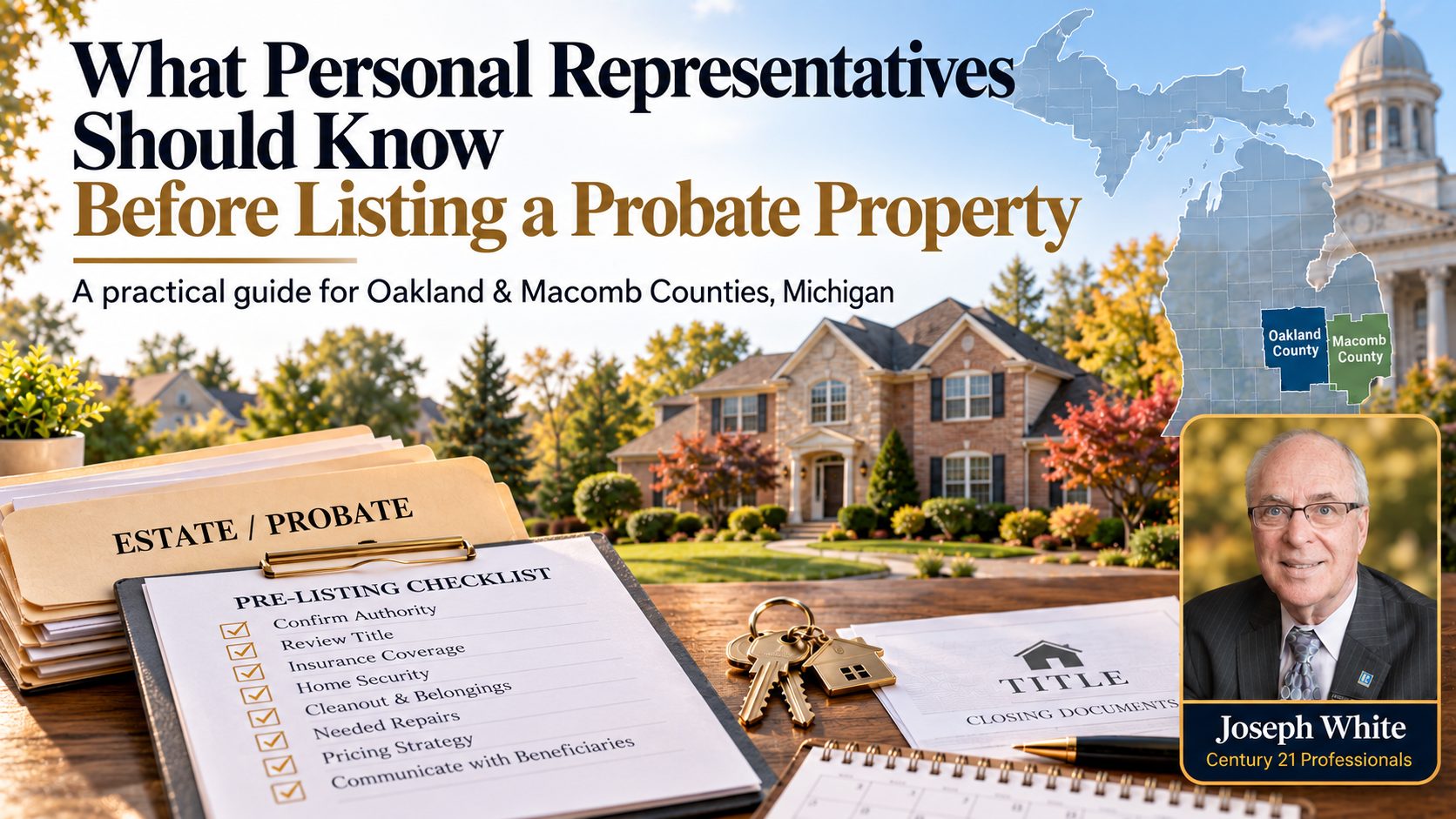
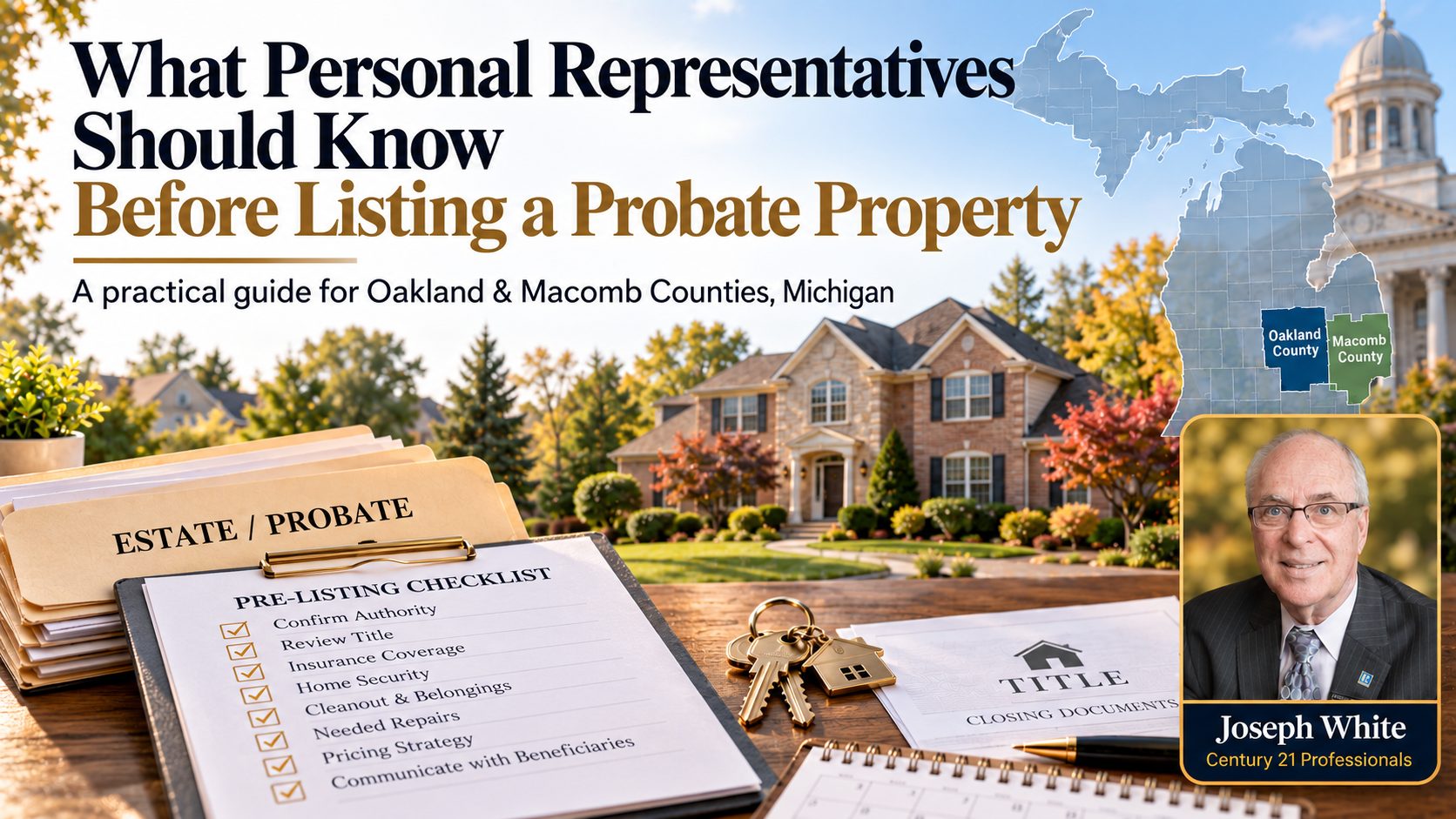
What Personal Representatives Should Know Before Listing a Probate Property
When someone is appointed as the Personal Representative of an estate, one of the biggest responsibilities may involve handling real estate. In Oakland and Macomb Counties, many estates include a house, condominium, vacant property, or family home that eventually needs to be sold.
Before placing that property on the market, there are several important things a Personal Representative should understand.
The first issue is authority. A probate property should not be treated like a regular home sale until it is clear who has the legal right to act on behalf of the estate. In Michigan, the Personal Representative may need court documents, such as Letters of Authority, showing that they have been appointed to handle estate matters. Those documents are important because the Realtor, title company, buyer, and closing office may all need to confirm who has the right to sign.
This is why the first step is not pricing the home or ordering photos. The first step is confirming authority.
The Personal Representative should also speak with the probate attorney before listing the property. Every estate is different. Some properties may be able to move toward sale more easily, while others may require additional court review or court approval before closing. The attorney can help clarify what the Personal Representative is allowed to do and whether the purchase agreement needs special probate language.
The second issue is title. Before the property is listed, it is wise to understand whether there may be title concerns. The title company may need to review the estate documents, ownership history, unpaid taxes, mortgages, liens, judgments, or other items that could affect closing. These problems do not always prevent a sale, but they can create delays if they are discovered late.
Starting title work early can save time and reduce surprises.
The third issue is the property itself. Many probate homes in Oakland and Macomb Counties have been owned for a long time. Some are clean, updated, and well maintained. Others may need cleanout, repairs, lawn care, snow removal, utility review, or safety work before going on the market.
The Personal Representative should walk through the home carefully, or have a trusted professional do so. Important documents, valuables, medication, financial records, firearms, jewelry, keys, titles, family photos, and personal items should be identified and secured. Before anything is removed, it can be helpful to take photos of the home and its contents. This creates a record and may help reduce future family disagreements.
The fourth issue is insurance and security. If the home is vacant, the Personal Representative should contact the insurance company and confirm coverage. A vacant home may not be covered the same way as an occupied home. This is especially important in Michigan during the winter months, when frozen pipes, furnace problems, sump pump failure, or water damage can quickly become expensive.
The home should also be secured. Doors, windows, locks, garage access, alarms, and exterior lighting should be checked. If several people have keys, or if it is unclear who has access, changing the locks may be a smart step. The goal is to protect the property and the estate before the home is exposed to buyers, vendors, or the public.
The fifth issue is cleanout and preparation. A probate home does not always need to be fully renovated before selling. In many cases, the better decision may be to sell as-is with proper pricing and clear expectations. In other cases, basic cleaning, landscaping, small safety repairs, or odor removal can make a meaningful difference.
The Personal Representative should avoid spending estate money without a plan. Before making repairs, it is important to ask whether the work will increase value, reduce buyer objections, help the home qualify for financing, or improve the likelihood of closing. Not every repair produces a strong return.
The sixth issue is pricing. Probate properties should be priced based on market data, not emotion. The home may hold years of family memories, but buyers will look at condition, location, comparable sales, updates, layout, lot size, school district, and current competition.
In Oakland and Macomb Counties, value can change significantly from one neighborhood to another. A home in Troy, Sterling Heights, Rochester Hills, Royal Oak, Macomb Township, Warren, Shelby Township, or Clinton Township may each require a different pricing strategy based on local buyer demand and recent sales activity.
A strong pricing strategy helps protect the estate. Overpricing can cause the home to sit, increase carrying costs, and create buyer skepticism. Underpricing can raise concerns among heirs about whether the estate received fair value. The goal is to price the property in a way that attracts serious buyers while supporting the estate’s best interest.
The seventh issue is communication. Probate real estate often involves multiple people: the Personal Representative, heirs, attorney, Realtor, title company, buyer, buyer’s agent, lenders, inspectors, and sometimes the court. Without good communication, small issues can become larger problems.
The Personal Representative should keep records, save emails, document decisions, and provide appropriate updates when needed. Good communication can reduce family tension and help everyone understand the process.
Finally, the Personal Representative should remember that selling a probate property is not just a real estate task. It is part of managing an estate. The goal is to protect the property, follow the proper process, reduce unnecessary delays, and move toward a successful closing with fewer surprises.
Before listing a probate property, it helps to slow down and get organized. Confirm authority. Talk with the attorney. Review insurance. Secure the home. Gather documents. Start title work early. Evaluate the property condition. Understand the local market. Then create a clear selling strategy.
A probate property can be sold successfully, but it should be handled with preparation, patience, and care.
If you are handling a probate property in Michigan and are not sure what to do next, I can help you understand the real estate side of the process.
Joseph White
Century 21 Professionals
On Time. Worry Free. Most Money.
This information is for general real estate education only and is not legal advice. Personal Representatives, heirs, and families should consult with a qualified Michigan probate attorney regarding their specific situation.